
From the Balancing the Diaphragms Series:
The Pelvic Diaphragm
'Treating Pelvic Pain and Dysfunction From a Global Lens'
|
City: Bury St. Edmunds IP28 6JY
State: Country: United Kingdom Speaker: Julie Hammond, Director Date: 8th & 9th August 2026 Venue: Functional Health Collaborative, Moseley's Farm Price: £325 Early Bird (held until 1st April 2026) - £375 thereafter Enquire Now |
City: Oslo
State: Country: Norway Speaker: Julie Hammond, Director Date: 21st & 22nd August 2026 Venue: Bergen Body Work, TBC Price: Please contact post@bergenbodywork.no for Details and Registrations Enquire Now |
About the Workshop:
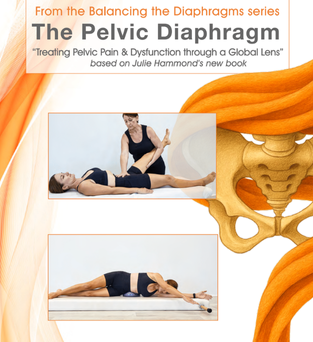 The Pelvic Diaphragm is based on Julie Hammonds' book, “The Pelvic Diaphragm: Treating Pain and Dysfunction from a Global Anatomical Perspective.”
Pelvic pain and dysfunction are multifaceted problems affecting both men and women and their quality of life. Pelvic diaphragm dysfunction is considered an isolated event, and it isn’t. A pelvis problem is never just a pelvis problem, and many other factors go with it.
In this two-day workshop, we will take a deep dive into the intricate and complex local anatomy of both the male and female pelvis and pelvic diaphragm from the perineum to the fascial diaphragm of the endopelvic fascia.
Once the local anatomy is understood, it is vital to appreciate how it fits into a global context. The pelvis is balanced within a larger global tensegrity structure. There are fascial and functional connections between the pelvic diaphragm and the respiratory diaphragm, as well as a functional relationship with the feet and ankles. There is a clear link between the ankle and pelvic positions, which affects the pelvic diaphragm within. The workshop will incorporate the latest research on these connections and their relevance to clinical practice. Making sure the pelvis has adequate support above and below before easing tension in the pelvic diaphragm, so the client can maintain the changes.
The aim is to inspire and excite students by making misunderstood, complex anatomy relatable. The focus is on the fascial connections between the pelvic diaphragm and respiratory diaphragm, introducing newer anatomical concepts. This is supported by current research that can inform clinical practice. Clear guidelines are provided, including fascial release techniques, self-release (client homework), and experiential activities.
Learning Outcomes:
At the end of the two days, you will:
- Have a clear understanding of pelvis and pelvic diaphragm anatomy, and a love of this anatomy.
- Be able to assess the pelvis and understand its relationship within the global tensegrity structure
- Explain the fascial and functional connections above and below
- Incorporate breath and pelvic diaphragm function together to ease or stimulate the pelvic diaphragm
- Understand the importance of treating global before local
Who is this Workshop for?
This workshop is a blend of theory, manual techniques, experiential and self-release techniques with myofascial balls. It is ideal for manual therapists and movement practitioners who teach one to one or small groups, who are looking to deepen their pelvis anatomy knowledge and understanding of global connections, encouraging practitioners to zoom out and think outside the box.
Note: Students who have attended a previous Balancing the Diaphragms workshop, will get 50% off The Pelvic Diaphragm workshop in Australia & New Zealand.
About Julie Hammond:
 Julie Hammond lives in Western Australia, where she runs a clinical practice. She has 25 years of clinical experience and specialises in Bodywork and Structural Integration. Julie is the Director and Lead Teacher of Anatomy Trains Australia & New Zealand. She also lectures internationally. She organised the first Australian Fascia Symposium in 2020 and co-founded Balancing the Diaphragms. Julie contributed a chapter on Anatomy Trains Structural Integration for Fascia, Function, and Medical Applications by David Lesondak. She has a passion for Women's Health. Julie's love of anatomy has led her to participate in many dissections. She has just completed her medical science degree. Julie is passionate about integrating current research into her clinical practice and vice versa. She believes clinical practice should inform research.