
Structural Essentials: Fans of the hip
City: Mandurah
State: Western Australia Country: Australia Speaker: Chris Clayton Date: 17th & 18th July 2026 (9am - 5pm) Venue: Seashells Mandurah, 16 Dolphin Drive Price: $725 AU Enquire Now |

City: Hong Kong
State: Hong Kong Country: Hong Kong Speaker: Quentin Yau Date: 18th & 19th July 2026 Venue: , 15/F Lee Kum Kee Central, 54-58 Des Voeux Road, Central Price: Please see https://resilienceforbody.com/ for Details and Registrations Enquire Now |

City: Camperdown
State: NSW Country: Australia Speaker: Alexia Langley Date: 20th & 21st September 2026 (9am - 5pm) Venue: Sancta Sophia (McDonald Room), 8 Missenden Road Price: $725 AU Enquire Now |
Fans of the Hip Course Description:
The hip and pelvis combine to transfer the forces from two legs into the one spine, and therefore have a hugely complex role to fulfil in the body. Ida Rolf described the pelvis as ‘the joint that determines symmetry’ and it is easy to see why. Differences between the hips can affect down into the legs or up through the spine. Achieving balance here can be essential for long lasting results in any therapy. This course sheds light on the pelvis – the keystone of human architecture – by organising the 20 or so muscles of the pelvis into three fans. As well as giving you strategies and techniques to balance these Fans of the Hip.
This course focuses on:
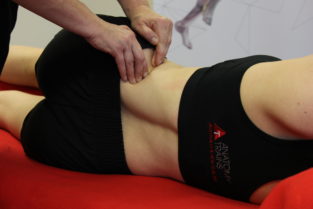 This Course focuses on:
*‘Fans of the Hip Joint’ - introduce the concept & anatomy of three fan-like soft tissue arrangements
*Using these fans to balance pelvic tilts and torsions
*Learning how to work accurately, effectively and sensitively with the adductors and deep lateral rotators, leading to the pelvic floor
*Structural & functional approaches for the pelvic floor, creating a balanced pelvis and functional hips
*Soft tissue approaches for SI joint balance
*The psoas complex and the many variations on ideas of how it does (or does not) affect pelvic, low back and hip patterns
Aims of the workshop:
Build a foundation for Structural Integration work
Understand the pelvis and its influence on the rest of the body via the Anatomy Trains
Give and progressively build on a system v. symptom based approach to healing
use functional & structural assessments to formulate session strategies
Apply Fascial Release work based on anatomy and body patterns
Shift from “ technique” to palpation driven work