
Anatomy Trains for Performance – by Chris Clayton
I am often asked what is best, manual or movement therapy? My answer is always the same, it purely depends on the needs of the individual – we need to consider their history, current situation and their goals.
I consider myself very fortunate because I get to be both a manual therapist and a movement therapist. What I really like about this combined manual and movement duality is that I get to use both in clinic, depending on my client/athlete’s needs. Maybe some of my interest in therapy comes from my late Dad having severe lower back trauma in the 1970s, or possibly it goes even further back in time? I remember having an insatiable interest in anatomy as a child. I have fond memories of rainy days tucked away in a corner going over the anatomy section in the Encyclopaedia of Brittanica. Possibly the interest in all things manual and movement has always been an intrinsic part of my makeup?
Throughout the years I have worked with professional/amateur boxers, dancers, basketballers, tri-athletes, marathoners, powerlifters and martial artists, plus many more. I use both Anatomy Trains Structural Integration and Anatomy Trains for Performance (ATP) concepts and training when working with clients, depending on what they need. One thing that always stands out clearly is that every client that I can get back into movement, regardless of how small, controlled or measured that movement is, has always turned the corner towards recovery and better performance.
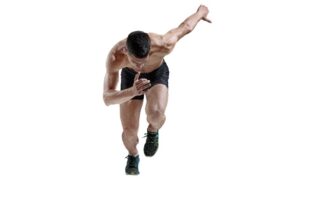
Personally, I am not satisfied with just getting someone back to some shadow of their former selves; I strive to find a way for them to excel! Even if that means excelling in a different way than before, the goal is to ultimately excel in some way. Whether you are recovering or are an otherwise healthy person simply striving to improve from where you are currently, improving our performance consistently gives us hope for renewed potential.
So, what is performance, and what does it mean to each of us? For those who are extremely athletically gifted in one way or another, it might be performing at the very highest levels of your chosen sport, for others, it is completing a fun run or accomplishing a goal that you have not achieved before. Performance is an individual thing – it changes with us as we age, and it depends on what drives us.
Anatomy Trains for Performance (ATP) is a three-day course that takes the participant on a deep dive into the world of improving performance and resilience by harnessing the assets of neuro myofascial training.
For us to be capable of performance, firstly, we need to be consistently resilient enough to manage the rigours of training, competition, and daily life.
One way we can address resilience is to minimise injury as much as possible. Injury ultimately slows our progress down; we need to minimise it and eliminate it where we can, or at the very least reduce its severity. As a part of that injury minimalisation process in ATP, we learn how to BodyRead in both static and movement phases and assess our client/athlete using the anatomy Trains lines as our road map. We will use the information gained from these assessments to help formulate our training strategies, with the aim of improving our client/athletes’ resilience, all the while keeping performance in mind.

“For us to be capable of performance, firstly we have to be consistently resilient enough to manage the rigours of training and competition.”
Over the three days of the workshop, we look at how Fascia (connective tissue) responds to training and what its role is in regard to performance. We will also look at how we can use ATP concepts to assist our hyper- and hypo-mobility subpopulations to work towards successful performance goals. We will also learn about how to insert fascial training into periodised training plans in a way that enhances the overall training cycle. Amongst all of this, we will be learning how to apply a safe range of movement that suits the individual, and how to apply appropriate and timely training progressions.
If someone were to ask me what take-home learning they would get from attending an ATP workshop, then in part my answer would be along these lines:
If we can understand fascia’s role in the context of the body, and how it is incredibly resilient when in a healthy state, and also how very restrictive and inhibiting it can be when it is not in a good place, then we will start to get a broader picture of how we need to include fascia-based concepts into our training. Adding to our fascial understanding gives us the tools that allow us to identify where the myofascial system may need improvement. This includes things like fascial system assessment (whole system in the context of neuro myofascial efficiency), and training pathways that allow us to become more resilient and adaptive in both the global body-wide sense, as well as tune ourselves for our preferred movement specificity. Then I feel that we can take ourselves toward greater performance potential.
The best way to strengthen a chain is to improve it at the weakest link. The same goes for athletes or individual enthusiasts – they are already strong where they are strong, but I am interested in where the weak link is. Once I have identified the weak link, I can then ask myself, what can I do to enable that weakness to become stronger or even become another strength? For example, sensory motor amnesia (SMA) limiting the range of motion in a particular joint from effectively allowing full force transmission during a chosen movement. Or, a fascially stiff or restricted portion of one of the anatomy trains myofascial meridians and how that can affect the quality of our intended global movement. If we can progressively retrain, reorganise, and proprioceptively reconnect the individual with these bodily components within a healthy fascial context, then we can help bring them back into a state of whole body synergy.
All of this equals more performance!
I am really excited to be launching Anatomy Trains for Performance in Forrestfield Perth, WA on 10-11-12 July 2026, for details click here
I also would like to take a moment like to especially thank Tom Myers and our Anatomy Trains CEO Mel Burns for their support in the development of ATP, and Julie Hammond our Director of Anatomy Trains Aus and NZ for all of her direction and encouragement.
Exciting times, keep moving
Chris
